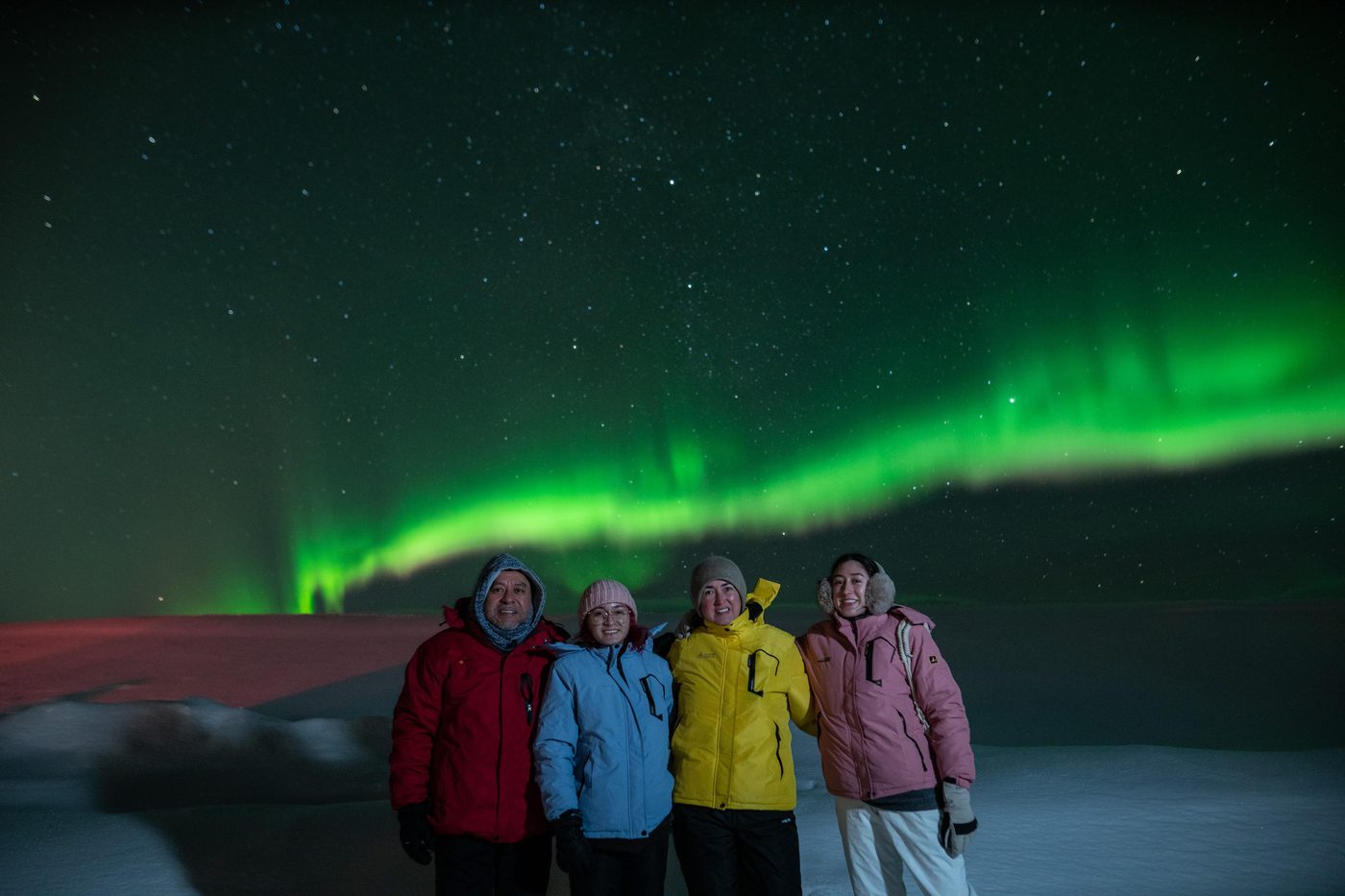
Stay warm, stay out longer
You will spend much of an aurora tour standing still in the dark, often in wind, at temperatures around or below freezing. The warmer you are, the longer you stay outside and the more of the show you see. Here is what to wear.
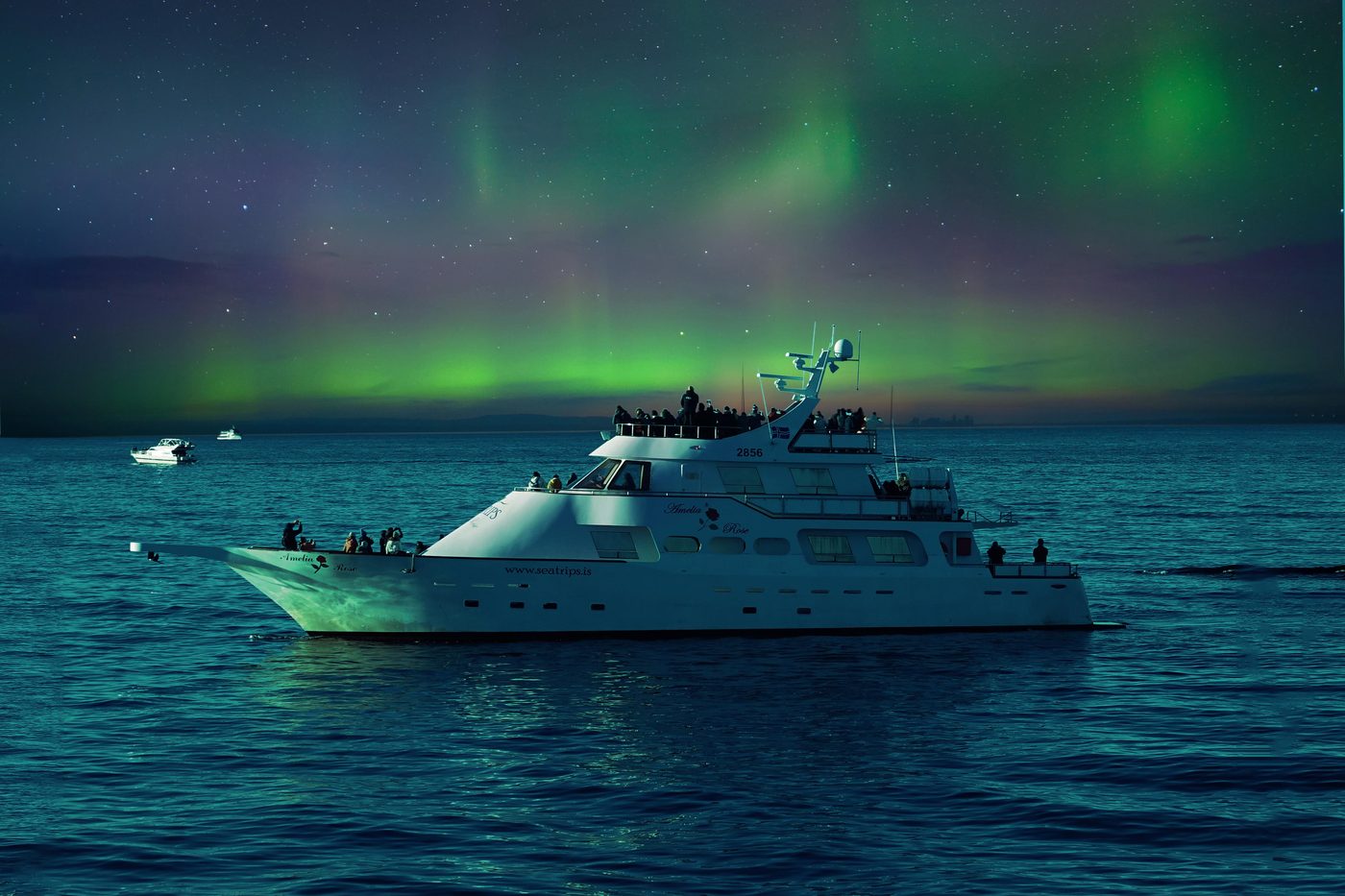
The yacht tour is the windiest option because you are on open water. Warm overalls are often available on board, but they go over your clothes, so you still need warm layers underneath plus a hat and gloves.
Not necessarily. A ski jacket, thermal underwear and winter boots from home are enough for most nights. If you are missing something, Reykjavik has plenty of outdoor shops, but prices are high, so pack the basics before you travel.
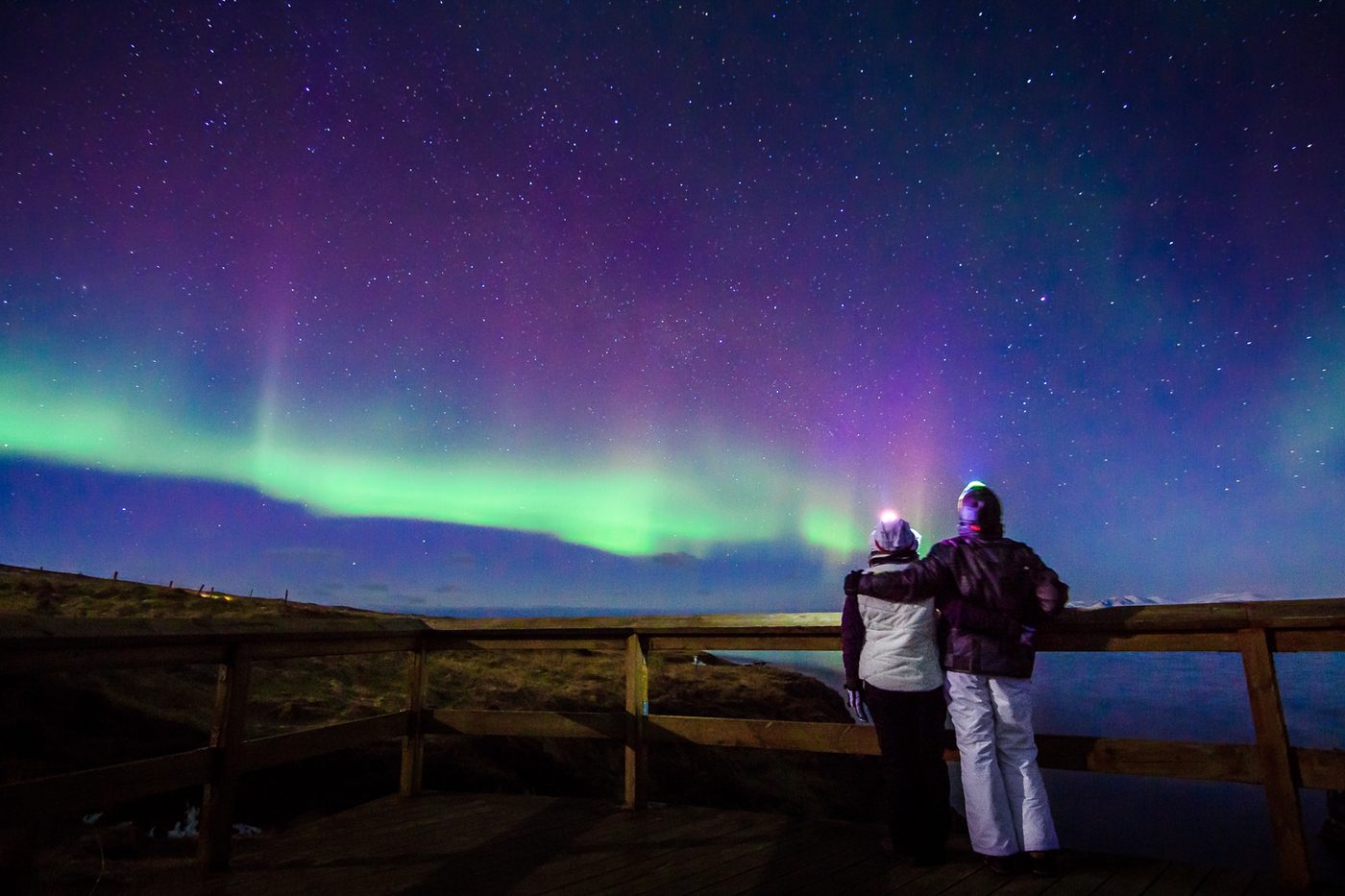
Warm clothes matter most on long hunts and on the boat.

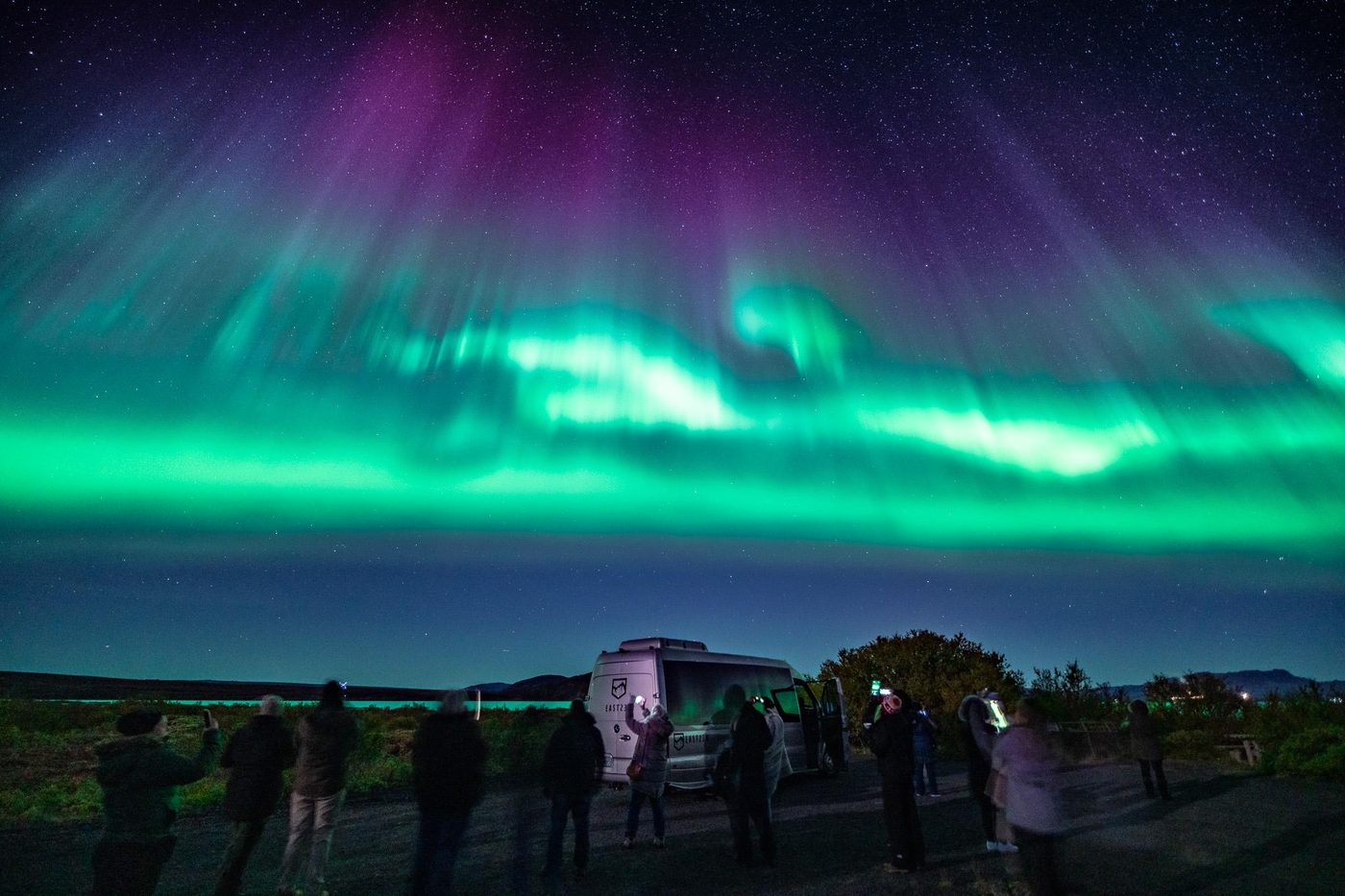
The most-booked aurora tour in Iceland by a long way. A large heated coach takes you out of the city to whichever dark spot has the clearest sky that night, the guide explains what you are looking at, and hot cocoa keeps you going while you wait. It is the cheapest guided option and a sensible first hunt; the trade-off is sharing the viewing spot with a full coach.
Check availability
The most popular small-group hunt from Reykjavik. A minibus with a limited number of guests means the guide can take smaller roads, move quickly when the forecast changes and stop where a coach cannot. Expect more personal attention and help with camera settings. A good step up from the big bus without a big jump in price.
Check availability
Two hours on a yacht in Faxaflói Bay, sailing away from the city lights with Reykjavik glowing behind you. You walk to the boat instead of riding a bus, there is a heated cabin with drinks for sale, and when the sky is active the view across the water is hard to beat. The catch: a boat cannot drive away from clouds, and the trip is cancelled in rough seas.
Check availabilityUsually around 0°C, often colder inland in midwinter, and the wind makes it feel much colder. Expect to stand still outside for long periods.
Bus and minibus tours generally do not; the yacht tour often has warm overalls on board. Always bring your own layers.
Jeans are cold when wet and windy. Wear thermal leggings underneath, or better, warm trousers with a waterproof layer.
Waterproof, insulated winter boots with a good grip. Paths and car parks are often icy.